 Dig Deep Races
Route index · Peak District and Suffolk
Trail and ultra races from Whirlow and Suffolk: all routes at a glance
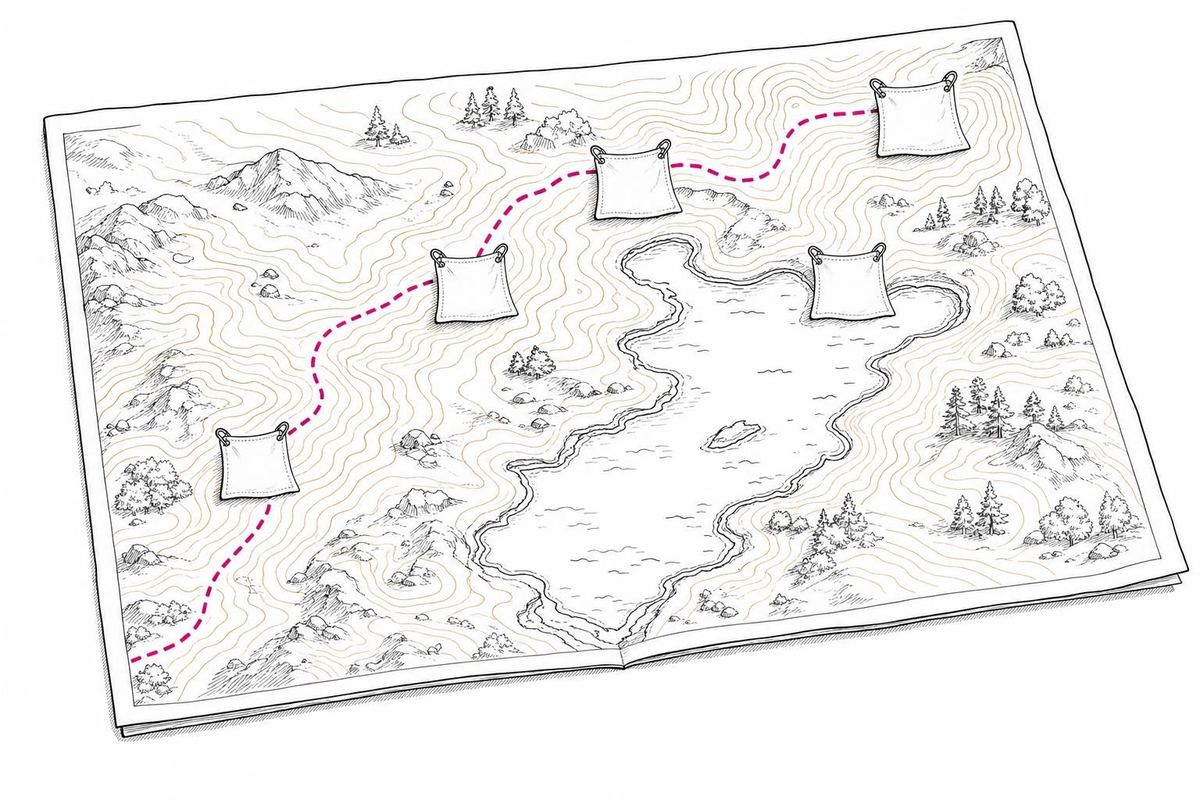
Five Peak District routes from 10 kilometres to 60 miles, all starting at Whirlow Hall Farm in Sheffield, plus four flatter courses in Suffolk. Pick a bib to open the route card.
- 60miles
Ultra Tour of the Peak District
The full loop: about 100 km, three support stations and a head torch on the kit list.
- 50miles
Peak Trails 50
The step between a first ultra and the full 60-mile loop.
- 30miles
Peak Trails 30
Four miles past a marathon, built for a first ultra.
- 12miles
12.12
19.5 km with 633 m of climbing: the bridge between a 10k and an ultra.
- 06miles
Whirlow 10k
Sheffield's farm trail 10k: up for half, down for half, then one last climb.
- 04routes
Suffolk trail races
Flat-ish forest, heath and coast: a 50, a 28, a 20k and a dash.
Split board
Distance, ascent and start time for each Peak District route, as published for the August race weekend.
| Route | Distance | Ascent | Start |
|---|---|---|---|
| Ultra Tour of the Peak District | 96 km | 3,222 m | 6:00am |
| Peak Trails 50 | 80 km | 2,600 m | 6:00am |
| Peak Trails 30 | 48 km | 1,388 m | 8:00am |
| 12.12 | 19.5 km | 633 m | 10:00am |
| Whirlow 10k | 10 km | not published | 10:20am |
How the routes are organised
The Peak District routes form a ladder. The Whirlow 10k and the 12.12 ran on the Sunday morning; the 30-mile intro ultra, the Peak Trails 50 and the 60-mile Ultra Tour ran on the Saturday, with the two longest races starting together at 6am. Each step roughly doubles the one before it.
The Suffolk courses used the same format on flat forest, heath and coast: a 50-mile ultra, a 28-mile intro ultra, a 20k and a 5.5-mile dash.
What every route had in common
- SportIdent dibbing at every checkpoint, with penalties or disqualification for a miss.
- Routes agreed with landowners and, in the Peak District, the National Park Authority, including restricted sections.
- Marking that helps in good weather, and a mandatory map and compass on the ultras for when it does not.
- Camping, food and changing facilities at the race base.
Choosing between the routes
The quickest way to pick a route is to start from the longest run of the last six months, not from ambition. A runner whose longest outing is a hilly half marathon will get far more out of the 12.12 than out of a first ultra attempted too early. The 12.12 still climbs 633 metres, which is plenty of ground to learn how the legs cope with constant gradient changes.
Three questions narrow it down further:
- How much climbing have you run? All four longer Peak District routes climb at roughly 46 to 54 metres per mile. If most of your training is flat, the Suffolk courses or the Whirlow 10k are the natural starting point.
- Can you navigate? The ultras were marked, but every briefing warned that poor weather could make the map and compass necessary. If that sounds daunting, the shorter Sunday races are the better place to begin.
- How long do you want to be out? The 30-mile race is a long day; the 50 is a very long day; the 60, with course times of about 9 to 22 hours, runs into the night for anyone slower than about 14 hours.
Recceing the routes
Each route card describes the published distance, ascent, start time and rules, plus what is known about the line of the course. The detailed route notes and maps were issued to entrants, and parts of the long routes changed in 2018, so a recce is best treated as a run on similar ground rather than an exact copy of race day. Public rights of way and open access land cover the ground the courses used. A map, a weather check and a message to someone at home about the plan are the three things every recce needs.
Questions about choosing a route
Which route is best for a beginner?
The Whirlow 10k on trail, or the 30-mile Peak Trails race for a first ultra.
Which route has the most climbing?
The Ultra Tour of the Peak District, with about 3,222 metres on the 2018 route.
Which routes need a head torch?
The 60-mile Ultra Tour had a head torch on its mandatory kit list. Slower runners on the 50 should carry one too.